Pages

.

Dog Breed Showcase: The beautiful Australian Shepherd

So each month I am going to start showcasing a particular breed of dog.  I get a lot of questions from people who are looking to get a dog for their family and are not sure what to get.  My advice.. do LOTS of research first. 

Each breed is different and requires different needs.

Some are couch potatoes and do great in apartments and some require extensive training and exercise... so make sure BEFORE you get the dog you understand what kind of dog he or she is and what they were bred to do.  This way, you won't be surprised when you get home.

Too many pets are abandoned or given to shelters because the owner did not do their research ahead of time and then decided the pet is not right for their family.  This is very sad for the animal.

The video below will give you some insight into this particular breed, so watch and see if this dog is right for your family.

Our first showcase dog for August 2013 is.... (drum roll)... the Australian Shepherd. Yay!!

reade more... Résuméabuiyad

Does you dog have allergies? What can you do?

Well, it is allergy season again.. high summer, things are blooming, pollinating, flying around, everyone is sneezing and coughing.. even your dog?

Yes, dogs can get allergies. In fact, it is getting more and more common for pets to have allergies.  There could be a thousand reasons for this but for the one suffering, no one really cares what the reason is, they just need some help in relieving the symptoms.

I am lucky, my dog has never had allergies, but I have quite a few clients dogs that do have them and we do administer medications for those ailments.

Just like people, dogs can show allergic symptoms when their immune systems begin to recognize certain everyday substances—or allergens— as dangerous. Even though these allergens are common in most environments and harmless to most animals, a dog with allergies will have an extreme reaction to them. Allergens can be problematic when inhaled, ingested or contact a dog’s skin. As his body tries to rid itself of these substances, a variety of skin, digestive and respiratory symptoms may appear.

Any dog can develop allergies at any time during his life, but allergic reactions seem to be especially common in terriers, setters, retrievers, and flat-faced breeds such as pugs, bulldogs and Boston terriers.

What Are the General Symptoms of Allergies in Dogs?
  • Itchy, red, moist or scabbed skin
  • Increased scratching
  • Itchy, runny eyes
  • Itchy back or base of tail (most commonly flea allergy)
  • Itchy ears and ear infections
  • Sneezing
  • Vomiting
  • Diarrhea
  • Snoring caused by an inflamed throat
  • Paw chewing/swollen paws
  • Constant licking
Allergic dogs may also suffer from secondary bacterial or yeast skin infections, which may cause hair loss, scabs or crusts on the skin.

What Substances Can Dogs Be Allergic To?
  • Tree, grass and weed pollens
  • Mold spores
  • Dust and house dust mites
  • Dander
  • Feathers
  • Cigarette smoke
  • Food ingredients (e.g. beef, chicken, pork, corn, wheat or soy)
  • Prescription drugs
  • Fleas and flea-control products (The bite of a single flea can trigger intense itchiness for two to three weeks!)
  • Perfumes
  • Cleaning products
  • Fabrics
  • Insecticidal shampoo
  • Rubber and plastic materials
Can Dogs Be Allergic to Food?
Yes, but it often takes some detective work to find out what substance is causing the allergic reaction. Dogs with a food allergy will commonly have itchy skin, breathing difficulties or gastrointestinal problems like diarrhea and vomiting, and an elimination diet will most probably be used to determine what food he is allergic to. If your dog is specifically allergic to chicken, for example, you should avoid feeding him any products containing chicken protein or fat.

Please note that food allergies may show up in dogs at any age.

What Should I Do If I Think My Dog Has Allergies?
Visit your veterinarian. After taking a complete history and conducting a physical examination, he or she may be able to determine the source of your dog’s allergic reaction. If not, your vet will most probably recommend skin or blood tests, or a special elimination diet, to find out what's causing the allergic reaction.

How Can Dog Allergies Be Treated?
The best way to treat allergies is to remove the offending allergens from the environment.

Prevention is the best treatment for allergies caused by fleas. Start a flea control program for all of your pets before the season starts. Remember, outdoor pets can carry fleas inside to indoor pets. See your veterinarian for advice about the best flea control products for your dog and the environment.

If dust is the problem, clean your pet's bedding once a week and vacuum at least twice weekly—this includes rugs, curtains and any other materials that gather dust.

Weekly bathing may help relieve itching and remove environmental allergens and pollens from your dog’s skin. Discuss with your vet what prescription shampoos are best, as frequent bathing with the wrong product can dry out skin.

If you suspect your dog has a food allergy, they will need to be put on an exclusive prescription or hydrolyzed protein diet. Once the allergy is determined, your vet will recommend specific foods or a home-cooked diet.

Are There Allergy Medications for Dogs?
Since certain substances cannot be removed from the environment, your vet may recommend medications to control the allergic reaction.

So yes dogs can get allergies, but don't fret, there are ways to help alleviate those awful symptoms.  If you are concerned about your dog possibly having allergies, get them to your vet right away.  The sooner the better.. for all of you !

reade more... Résuméabuiyad

Pet food and treat recalls - keep your pets safe!

Here we go again... another newscast about the most recent food and pet treat recalls.  We are hearing more and more of these recalls due to the number of ingredients that are coming from overseas. 

This is why I am a distributor of Flint River Ranch All Natural Pet Food.  They are made right here in the USA and all ingredients are safe and natural.  If you are interested in checking them out, please go to http://www.frrco.com/.

Part of your responsibility as a pet parent is to help protect your pet from potentially harmful products. While it is nearly impossible to ensure that your pet will never come in contact with recalled pet food or treats, you can reduce your pet's risk.

I used to work for medical device companies as a Quality Administrator so I frequently went into the FDA database to get alerts on products that were recalled.  You can do the same thing for pet food and treats.

The FDA keeps an extensive list of all pet food recalls.  You can also sign up to get these alerts emailed directly to you. If you would like to keep current on these recalls and sign up for these alerts, please go to:  http://www.fda.gov/animalveterinary/safetyhealth/recallswithdrawals/default.html

Below are tips to protect your pets from contaminated food and treats and below that is a current list of products recalled in 2013... so far.

Tips for protecting your pets from contaminated food and treats

1. Check the list of recalled pet foods and treats regularly for information about items that have been recalled. 

2. If your pet's food or treats are recalled, immediately stop feeding the product to your pet. Recalled products may be returned to the store where they were purchased for a full refund or thrown away in a secure area not accessible to animals. If you have questions about recalled food or treats or require additional information contact the company that manufactures the product.

3. If your pet may have consumed a recalled product, consult your veterinarian, even if your pet does not appear to have any symptoms.

4. If your pet has become ill or died because of a recalled food or treat, please report it to The FDA Consumer Complaint Coordinator in your state.

FDA advisories on recalled pet food and treats
June 18, 2013 : Natura Pet Issues Voluntary Recall of Specialized Dry Pet Foods Due to Possible Health Risk
June 12, 2013: Hartz Mountain Corporation Is Voluntarily Recalling One Specific Lot of 1.2 oz. Size of Wardley Betta Fish Food Due to Possible Health Risk
April 22, 2013: Natura Pet Expands Voluntary Recall of Dry Pet Foods Due to Possible Health Risk
April 19, 2013: Merit Bird Company, LLS Recalls Vitae Because of Possible Health Risk
April 5, 2013: Bravo! Issues a Voluntary Recall for Three Raw Frozen Food Diet for Dogs and Cats Because of Possible Salmonella Health Risk
April 2, 2013: Natura Pet Expands Voluntary Recall of Dry Pet Foods Due to Possible Health Risk
March 22, 2013: Jones Natural Chews Co Recalls Woofers Dog Treats Because Of Possible Salmonella Health Risk
March 19, 2013: Natura Pet Issues Voluntary Recall of Specialized Dry Pet Foods Due to Possible Health Risk
March 14, 2013: Bravo! Recalls 2 lb Tubes of Chicken Blend-Raw Frozen Food Diet for Dogs and Cats (One Lot Code) Because of Possible Salmonella Health Risk
March 11, 2013: Premium Edge, Diamond Naturals and 4health Dry Cat Food Formulas Voluntarily Recalled Due to Possibility of Low Levels of Thiamine (Vitamin B1)
March 11, 2013: Diggin' Your Dog Recalls Strippin' Chicks Pet Treats Distributed in Colorado and Nevada Due to Possible Salmonella Hazard
March 8, 2013: Steve’s Real Food Recalls Turducken Canine Recipe Patties Because of Posssible Health Risk
February 28, 2013: United Pet Group Inc., Voluntarily Withdraws "Ultra Blend Gourmet Food for Parakeets," "ēCotrition Grains & Greens Nutritional Supplement for Parakeets," "ēCotrition Grains & Greens Nutritional Supplement for Canaries and Finches," and "ēCotrition Grains & Greens Nutritional Supplement for Cockatiels" Due to Possible Salmonella Contamination
February 22, 2013: The Honest Kitchen® Voluntarily Recalls Limited Lots Of Verve®, Zeal®And Thrive® Products Due To Possible Health Risk
February 22, 2013: Kasel Associates Industries Recalling Certain Pet Treats Due to Salmonella Contamination Boots and Barkley, Colorado Naturals, Nature’s Deli among brands affecteds
February 22, 2013: Kaytee Recalls Bird Treats and Greens Due to Possible Salmonella Contamination from Parsley Flakes
February 21, 2013: Nutri-Vet, LLC Recalls Nutri-Vet and Nutripet Chicken Jerky Products Because Of Possible Salmonella Health Risk
February 19, 2013: Nature's Variety Issues Voluntarily Recall of One Batch of Instinct® Raw Organic Chicken Formula for Dogs & Cats Due to Possible Health Risk
January 27, 2013: The Hartz Mountain Corporation is voluntarily withdrawing its Hartz ® Chicken Chews ™ and Hartz ® Oinkies® Pig Skin Twists wrapped with Chicken for dogs
January 15, 2013: Milo’s Kitchen® Voluntarily Recalls Chicken Jerky and Chicken Grillers Home-style Dog Treats
January 9, 2013: FDA CVM Update on Jerky Treats

Please check your pets food and treats before buying. As pet parents it is our responsibility to make sure we keep our pets safe !
reade more... Résuméabuiyad

Dining with your dog in Chicago !

It's that great time of year when everyone is looking to eat "alfresco"... Sitting outside sipping a margarita and dining at some of Chicago's finest establishments.

Now there is a dining guide for all you living in the Chicago area that will allow you to bring your dogs.

How cool is that?

There are a few rules though so below I have listed the rules and the list of dining establishments.

Things to Bring
  • ID tags on your dog (including Chicago license if applicable)
  • Pick-up bags
  • Your dog first aid kit
  • Water and a bowl
What to Expect
Dining with your dog can be a fun experience for both of you, provided your dog is ready for the outdoor restaurant environment. Dogs should be well behaved and trained before accompanying you to dinner. It is helpful if you dog knows a "down - stay" or "sit - stay" as it can be very difficult to eat while holding your dog's leash if they are wandering around, not to mention disturbing to other restaurant patrons. Of course there will be food around and most likely waiters carrying trays so your dog should be well-behaved around food-- no begging! Dogs are not allowed inside any place which serves food, so if this is a "self-service" restaurant you will need to have someone who can go inside and order.

Where to Go
Chicago passed a new "Dog Friendly Dining" ordinance effective in 2008. To allow dogs in their outdoor dining areas, restaurants must purchase a Supplement License for Dog Friendly Areas. There are rules and regulations which the restaurants must follow in order to allow dogs and dogs are not allowed to be petted or handled by staff members or fed while at the restaurant. Dogs must have a city license and proof of vaccinations.

We recommend you call ahead before bringing your dog to any restaurant as some restaurants may not allow dogs if they are very busy or on certain nights or times, or may not have their outdoor tables set up depending on the weather.

Dog Friendly Restaurants (alphabetical)
312 Chicago 136 N Lasalle St Chicago, IL 60602 (312) 696-2420
Adobo Grill 1610 N Wells St Chicago, IL 60614 (312) 266-7999
Adobo Grill 2005 W Division St Chicago, IL 60622 (773) 252-9990
Bad Dog Tavern 4535 N Lincoln Ave Chicago, IL 60625 (773) 334-4040
Blackies 755 S Clark St Chicago, IL 60605 (312) 786-1161
Boundary 1932 W Division St Chicago, IL 60622 (773) 278-1919
Brasserie JO 59 West Hubbard Chicago, IL 60610 (312) 595-0800
Bull and Bear 431 N. Wells Chicago, IL 60654 (312) 527-5973
Charmers 1500 W Jarvis Ave Chicago, IL 60626 (773) 743-2233
Chicago Joe's 2256 W Irving Park Rd Chicago, IL 60618 (773) 478-7000
Daily Bar & Grill 4560 N Lincoln Ave Chicago, IL 60625 (773) 561-6198
Dawghaus Cafe 6219 N Sheridan Rd Chicago, IL 60660 (773) 761-3294
Dunlay's On Clark 2600 N Clark St Chicago, IL 60614 (773) 883-6000
Eve 840 N Wabash Ave Chicago, IL 60611 (312) 266-3383
Feast Restaurant & Bar 25 E Delaware Pl Chicago, IL 60611 (312) 337-4001
Finly Mahony's 3701 N Broadway St Chicago, IL 60613 (773) 549-0097
Four Farthings Tavern 2060 N Cleveland Ave Chicago, IL 60614 (773) 935-2060
Four Moon Tavern 1847 W Roscoe St Chicago, IL 60657 (773) 929-6666
Frasca Pizzeria & Wine Bar 3358 N Paulina St Chicago, IL 60657 (773) 248-5222
Gibsons Bar & Steakhouse 1028 N Rush St Chicago, IL 60611 (312) 266-8999
Glunz Bavarian Haus 4128 N Lincoln Ave Chicago, IL 60618 (773) 472-4287
Hub 51 51 W Hubbard St Chicago, IL 60654 (312) 828-0051
Hugo's Frog Bar & Fish House 1024 N Rush St Chicago, IL 60611 (312) 640-0999
Innjoy 2051 W Division St Chicago, IL 60622 (312) 394-2066
Jefferson Tap 325 N Jefferson St Loop/West Loop Chicago, IL 60661 (312) 648-0100
Joe's Sports Bar 940 W Weed St Chicago, IL 60642 (312) 337-3486
John's Place 1202 W Webster Ave Chicago, IL 60614 (773) 525-6670
Jury's 4337 N Lincoln Ave Chicago, IL 60618 (773) 935-2255
LuxBar 18 E Bellevue Pl Chicago, IL 60611 (312) 642-3400
Moonshine 1824 W Division St Chicago, IL 60622 (773) 862-8686
Natalino's 1523 W Chicago Ave Chicago, IL 60642 (312) 997-3700
O'Brien's Restaurant 1528 N Wells St Chicago, IL 60610 (312) 787-3131
O'Briens Riverwalk Cafe 45 E Riverwalk S Chicago, IL 60610 (312) 346-3131
PJ Clarkes 1204 N State Pkwy Chicago, IL 60610 (312) 664-1650
Riverview Tavern 1958 W Roscoe St Chicago, IL 60657 (773) 248-9523
Rl Restaurant Ralph Lauren 115 E Chicago Ave Chicago, IL 60611 (312) 475-1100
Rockit Bar & Grill-Wrigleyville 3700 N Clark St Chicago, IL 60613 (773) 645-4400
Sage 2465 N Clark St Chicago, IL 60614 (773) 348-7243
Scoozi 410 W Huron St Chicago, IL 60654 (312) 943-5900
Small Bar 2049 W Division St Chicago, IL 60622 (773) 772-2727
Smoke Daddy Restaurant 1804 W Division St Chicago, IL 60622 (773) 772-6656
Southport Lanes & Billiards 3325 N Southport Ave Chicago, IL 60657 (773) 472-6600
The Fifty/50 2047 W. Division St. Chicago, IL 60622 (773) 489-5050
Via Carducci la Sorella 1928 W Division St Chicago, IL 60622
Vong Thai Kitchen 6 W Hubbard St Chicago, IL 60654 (312) 644-8664

So next time you plan on doing out to dinner and sitting outside, it is always more fun when you can bring your best friend.

For more information, please check out:  http://www.chicagocanine.com/dining.html
reade more... Résuméabuiyad

How to choose the right pet for your children

When I grew up my parents always had Dachshunds.  When I grew up and got to choose my own pet I went for the bigger dogs as I am pretty active, I have neighbors with kids and I wanted a dog that had a great temperament.  

When choosing the right pet for your child a lot of thought and research should go into your choice.  A lot of people go visit the pet store, buy a puppy or a bunny or a hampter and realize it is not the right kind of pet for the family.  Unfortunately this usually doesn't end well for the new pet.

As the parent it is important that you make this decision, not the child.  If it were up to your child, they would probably opt for a polar bear... LOL !

I have broken down the types of pets that would be a good fit for your child. But remember, handing over the responsibilities of owning a pet to a young child will not work.  This is a family decision and the family should all help in taking care of your new pet.

Dog
  • We don't call them our best friends for nothing. Loyal and loving, dogs are social animals who thrive on being upstanding members of their families. 
  • If there are young kids in the house, a puppy may not be your your best bet. Instead, try a medium-sized dog over five months of age. 
  • Don’t forget to draw up a schedule of who in the family will do what—walking, playing, feeding and grooming.
Cat
  • Graceful, athletic, playful, sensitive and affectionate, felines are the most popular pet in the United States today and stand high on the cuddle scale. 
  • Cats are not like dogs, and can be very independent. 
  • If you've done your research and decided on a cat of an appropriate age for your household, visit your shelter and be sure to have your new friend spayed or neutered!
Budgie
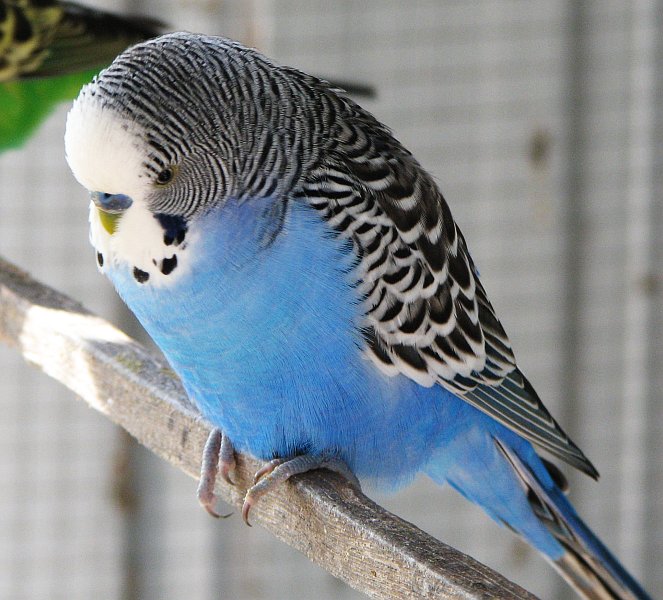
  • Playful, cheery and chirpy, this little charmer is the most popular avian companion. He's gentle and funny, can be readily tamed to sit on your shoulder, and makes a perfect first bird for the young members of the family. 
  • Birds can be messy….really messy. You'll need to clean the cage and surrounding area daily. Also, keep in mind that not all budgies talk, even though they have the capability. 
  • A budgie is a great choice if you've got your heart set on an avian mimic but don't have the time, money or space for a larger member of the parrot family.
Fish
  • Got allergies, limited space and/or lean towards the exotic? Although fish are relatively low maintenance, there's a definite science to keeping them and their environment healthy—hence their appeal to big-brained types who get a kick out of seeing the nitrogen cycle at work. 
  • If you’re looking for a pet who will follow you around, lick your face and play fetch, a finned friend is probably not for you. 
  • Get all of your equipment beforehand, do your research and know what species are safe to keep together. If you've done your homework, you probably know that common goldfish can live for more than 10 years if properly cared for!
Guinea Pig
  • They're not pigs and they're not from New Guinea, but these cuddle bugs are the most docile of all companion rodents. Under adult supervision, guinea pigs are excellent first pets for children. 
  • These little critters aren't the kind of pets you can passively watch through the bars of the cage. They need time out to exercise every day. 
  • Fun for the whole family, social GPs are great in pairs, just be sure you have adequate housing for them. And do your reading—these guys have special dietary needs!
Hamster
  • Off the cuteness charts, hamsters are busy little rodents who are very popular with kids and great pets for apartment dwellers. 
  • Did you know that hamsters sleep during the day and are active at night? 
  • You’re ready for a hamster if you're a night owl and/or won't be bothered by your pet eating, digging and running on his wheel in the wee hours. P.S. Syrian hamsters are solitary and must be kept alone. Dwarf hamsters are more social and can be housed together, so make sure you know what species you’re bringing home. 
Rabbit 
  • They can be trained to use the litter box, they'll come when called, and their all-time favorite activities are to dig and chew. Who knew? The sometimes sweet, sometimes sassy rabbit can be a great pet for the right family. 
  • Rabbits can’t live outdoors! Outside, rabbits can die of fright and are susceptible to diseases spread by ticks and other parasites. 
  • If you've done the research and understand exactly what rabbits need—big-time digging and chewing—then you’re ready for a cotton-tailed friend. Be sure to have your new bun spayed or neutered.
All of these animals above can be great pets for children.  Take the time to do your research and when you get them home, enjoy them as a family.  


reade more... Résuméabuiyad

Water Toxicity or Hyponatremia in Dogs = Water playtime can be deadly!

We have all done it... we take our dogs to the dog park that has a lake.. or we take them to a lake or a river or a swimming pool.. throw a ball or stick or whatever and let our dogs just go crazy jumping in after that object.

What happens when they jump in for that?  They open their mouths.. when they do that, insane amounts of water are ingested by the dog.. through their nose, theirs mouths, and sometimes down into their lungs.

Too much of this can cause water Hyponatremia or Water Toxicity in dogs. This can be fatal.

I just heard about this and I was so freaked out about this that I thought I would write about it so everyone knows what this is about and what to watch out for and how to prevent it.  I personally have a Yellow Lab who loves to swim and catch balls thrown into the water but I certainly don't want him to get hurt by it.

So let's start...

What is Hyponatremia or Water Toxicity?
Hyponatremia is the clinical term given to a condition in which a dog is suffering from low concentrations of serum sodium in the blood. As a component of the extracellular fluid (fluids outside of the cells), sodium is the most abundant positive charged atom in the body. For this reason, a condition of hyponatremia usually reflects a concurrent condition of hyposmolality, an underconcentration of osmotic solution in the blood serum; that is, a lack in the ability of body fluids to pass through the cellular membranes (osmosis), by which the body's chemical concentrations are kept in balance. Hyposmolality is typically associated with a decreased amount of sodium content throughout the body.

Theoretically, hyponatremia can be caused by either water retention or solute loss (loss of a dissolvable body substance -- in this case, salt/sodium is the solute). Most solute loss occurs in iso-osmotic solutions (e.g., vomit and diarrhea), and as a result, water retention in relation to solute is the underlying cause in almost all patients that are diagnosed with hyponatremia. In general, hyponatremia occurs only when there is a defect in the kidney's ability to excrete water.

What are the causes?
When water enters the body faster than it can be removed, bodily fluids are then diluted and a potentially dangerous shift in the electrolyte balance occurs. This shift causes cells to swell as a result of the changes in internal pressure, which can affect systems such as the central nervous system and the brain.

What are the symptoms?
Ataxia (staggering, falling over)
Vomiting
Weakness, lethargy
Pale gums
Bloating
Excessive salivation
Dilated pupils, glazed eyed
Seizures, convulsions

How can we treat it?
Primary treatment will depend on the severity of the hyponatremia, and the associated neurological symptoms. The severity of any underlying disorders will guide treatment priorities as well. Treatment generally consists of addressing the underlying cause, and increasing the serum sodium concentration if necessary.

Overly rapid normalization of the hyponatremia can have potentially severe neurological results, and may be more detrimental than the hyponatremia itself. Therefore, an isotonic saline is the fluid of choice in the large majority of cases. More aggressive correction of the serum sodium concentration with hypertonic saline is rarely necessary. Hypervolemic patients (patients with too much fluid in the blood) are typically managed with diuretics (fluid reducers) and salt restriction.

Conversely, hypovolemic patients (patients with too little fluid in the blood) are managed by replacing the volume deficit with isotonic saline. Other therapeutic interventions are dictated by the underlying cause of the hyponatremia.

How can we prevent it?
When you play with your dog in the water..make sure you watch how much water your dog may be ingesting in constant play in the water... give your a dog break between playtime.. he needs time for his body to process any water he may have ingested.  If you suspect your dog is experiencing water toxicity, you must contact your veterinarian immediately!  Putting off treatment could be a matter of life and death for your dog!

I know it is summer and it is all about the fun.. but you are the pet parent and you must make sure that your pets are playing safely !
reade more... Résuméabuiyad